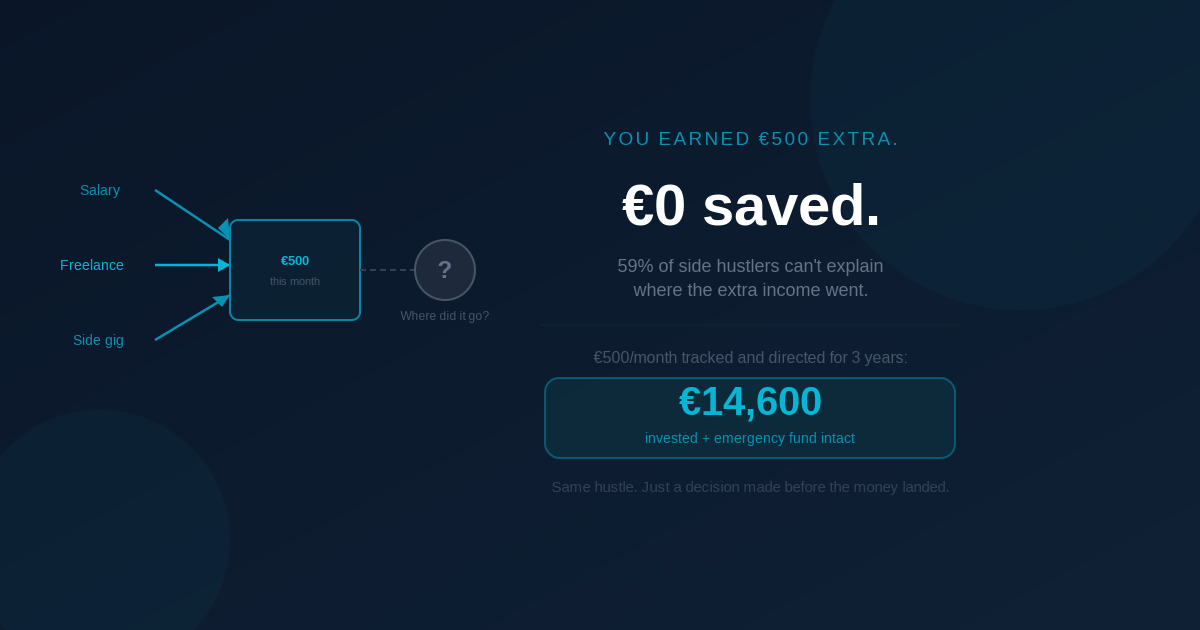
You Earned €500 Extra Last Month. Where Did It Go?
Side hustle income feels like found money — so the brain treats it like free money. 59% of people with multiple income streams can't account for where the extra goes. Here's the system that fixes that.
Last month you delivered, freelanced, tutored, resold, or consulted your way to an extra €500. You checked the total and felt good about it. Then life happened — some groceries here, a dinner there, a thing you needed anyway — and by month end the number in your account didn't reflect the extra €500. Not even close.
This isn't where the money went. This is why it went there.
The Problem: Your Brain Treats Irregular Income Differently Than Salary
Psychologists call it "mental accounting" — we unconsciously categorize money based on how it arrived, and that categorization changes how freely we spend it.
Salary: structured, expected, already mentally allocated to rent, food, bills. Hard to spend carelessly because it's "spoken for" before it lands.
Side hustle income: irregular, unexpected, feels like a bonus. The brain files it under "extra" — and extra money gets extra permission to be spent casually. On the same things you'd normally spend, but with less friction.
This is why 59% of people with side income report it doesn't meaningfully improve their financial position. The income is real. The capture system doesn't exist.
The Agitation: What €500/Month Untracked Costs You
€500 extra per month, mentally accounted as "bonus" and absorbed into casual spending:
- Year 1: €6,000 earned, ~€0 saved or invested
- Over 5 years: €30,000 earned, marginal improvement to net worth
- Psychological cost: you worked extra for nothing tangible
€500/month, assigned a job before it's spent:
- Applied to credit card debt: €6,000/year in debt cleared, potentially saving €1,800+ in interest
- Invested at 6% average: after 5 years, ~€34,800
- Directed to emergency fund: fully funded 6-month buffer in under a year
Same €500. Completely different outcomes — determined entirely by whether you decided what it was for before it arrived.
Where Side Hustle Money Actually Goes (The Honest Breakdown)
In the absence of a system, extra income typically leaks through three channels:
1. Lifestyle upgrade drift — slightly better versions of things you already buy. Better groceries, a nicer restaurant option, the thing you "treated yourself to" because you'd earned it. Individually justified. Collectively $200–300/month gone.
2. Deferred guilt spending — purchases you postponed during a tight month that suddenly feel okay now that there's extra cash. The brain retroactively spends money that was "owed."
3. Invisible friction reduction — convenience spending increases when cash feels less tight. More taxis instead of transit. More delivery instead of cooking. More impulse purchases because the account isn't threatening. Each transaction is small. The total isn't.
None of these are dramatic. None appear as a category on your bank statement. That's precisely why they're so effective at consuming extra income without leaving evidence.
The Solution: Give Every Euro a Job Before It Lands
The system works like this:
Before you earn the extra income:
Decide in advance where it goes. Not "I'll figure it out when I get paid" — decide now:
- 50% to [specific goal: debt / emergency fund / investment account]
- 30% to a discretionary "bonus" fund you can actually enjoy spending
- 20% set aside for taxes if you're self-employed (non-negotiable)
When the payment arrives:
Transfer the predetermined amounts immediately — within 24 hours. Don't wait until you "have time to think about it." The thinking is already done. The friction of the transfer is what makes the system work.
Track it separately:
Keep side hustle income labeled differently in your expense tracker. Not mixed into salary — separate. This gives you visibility on what the extra effort is actually producing for your financial position, not just your bank balance on a Tuesday.
Name the goal it's funding:
"This month's Deliveroo income = emergency fund." Specific, named purposes make the money harder to mentally recategorize as free cash. It's already spoken for.
The Tax Problem Nobody Talks About
If you're earning side hustle income in Spain, the UK, Germany, or as a US expat — you likely owe taxes on it that aren't being withheld automatically. Employees have PAYE or equivalent. Freelancers and gig workers don't.
A safe default: set aside 20–25% of every side hustle payment immediately into a separate sub-account. Don't touch it until tax time. Many people get hit with unexpected tax bills in the spring because they spent the gross income without accounting for what the government was owed.
That €500 month? €125 of it may not be yours to keep. Plan accordingly.
What €500/Month Tracked and Purposefully Directed Looks Like Over 3 Years
Scenario: €500 extra per month, 80% captured (€400/month), split between emergency fund (first 6 months) then investment account thereafter.
- Month 6: emergency fund fully funded at €2,400
- Month 12: €2,400 invested (from month 7–12)
- Year 3: ~€14,600 invested + emergency fund intact
Three years of side hustling, with a system. No extra sacrifice. Just a decision made before the money arrived.
Log your income — salary and side hustle separately — in the Savings Tracker to see exactly what your extra work is producing each month, and where it's actually going.
Found this useful? Share it